Choosing the right end mill is one of the most important decisions in CNC machining. For beginners, it can feel overwhelming: there are many shapes, materials, flute counts, coatings, and technical terms. Selecting the wrong end mill often leads to poor surface finish, short tool life, broken tools, or wasted machining time.
This article is designed to help beginners and first-time buyers understand the key questions they should ask before selecting an end mill. By following these questions step by step, you can avoid common mistakes and choose a tool that matches your application, machine, and production goals.
Why Asking the Right Questions Matters
An end mill is not a one-size-fits-all tool. Even small differences in geometry or coating can have a big impact on:
- Tool life
- Surface finish
- Machining speed
- Production cost
- Process stability
Experienced machinists often choose tools instinctively. Beginners need a clear decision framework. The questions below provide that framework.
Question 1: What Material Am I Machining?
This is the first and most important question.
Different materials behave very differently when being cut. An end mill designed for aluminum will perform poorly in steel, and a steel tool may fail quickly in stainless steel or titanium.
Common Material Groups
- Aluminum and non-ferrous metals
- Carbon steel and alloy steel
- Stainless steel
- Cast iron
- Titanium and superalloys
- Plastics and composites
Why This Matters
Material affects:
- Flute count
- Cutting edge sharpness
- Coating selection
- Chip evacuation requirements
Beginner Tip
Always start tool selection by identifying the primary workpiece material. Many end mills are clearly labeled by material type on professional websites.
Question 2: What Type of Operation Am I Performing?
End mills are used for many different operations, and not all tools are suitable for every task.
Common End Mill Operations
- Slotting
- Pocket milling
- Side milling
- Profiling
- Facing
- 3D contouring
- Roughing
- Finishing
Why This Matters
Each operation places different forces on the tool:
- Slotting requires strong end cutting edges
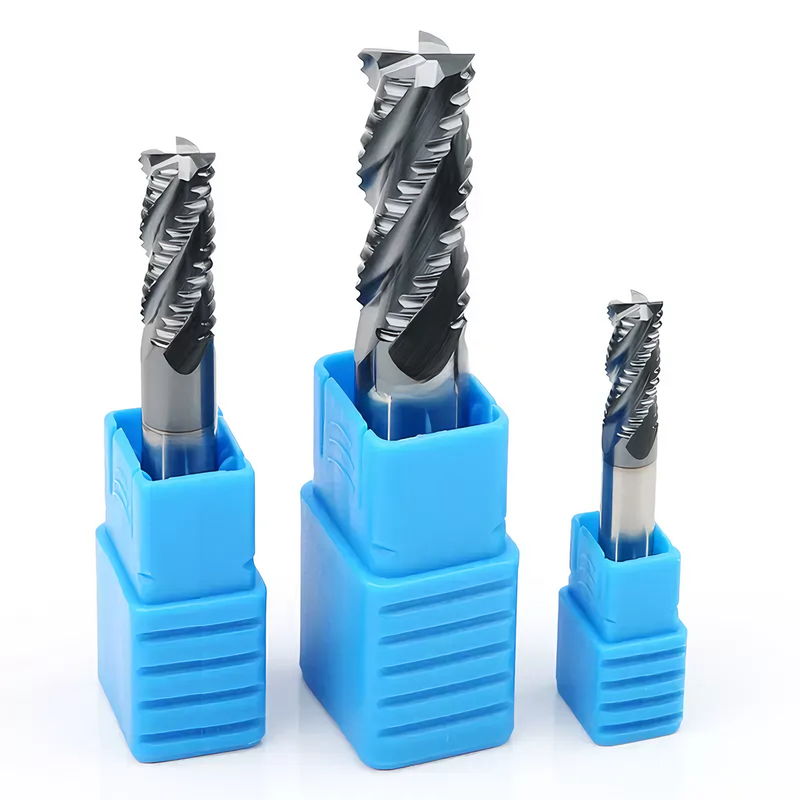
- Roughing requires chip-breaking geometry
- Finishing requires smooth cutting and stability
Beginner Tip
Define whether your operation is roughing, finishing, or both. This alone can eliminate many unsuitable tools.
Question 3: Which End Mill Shape Do I Need?
The shape of the end mill determines what kind of geometry you can machine.
Common End Mill Shapes
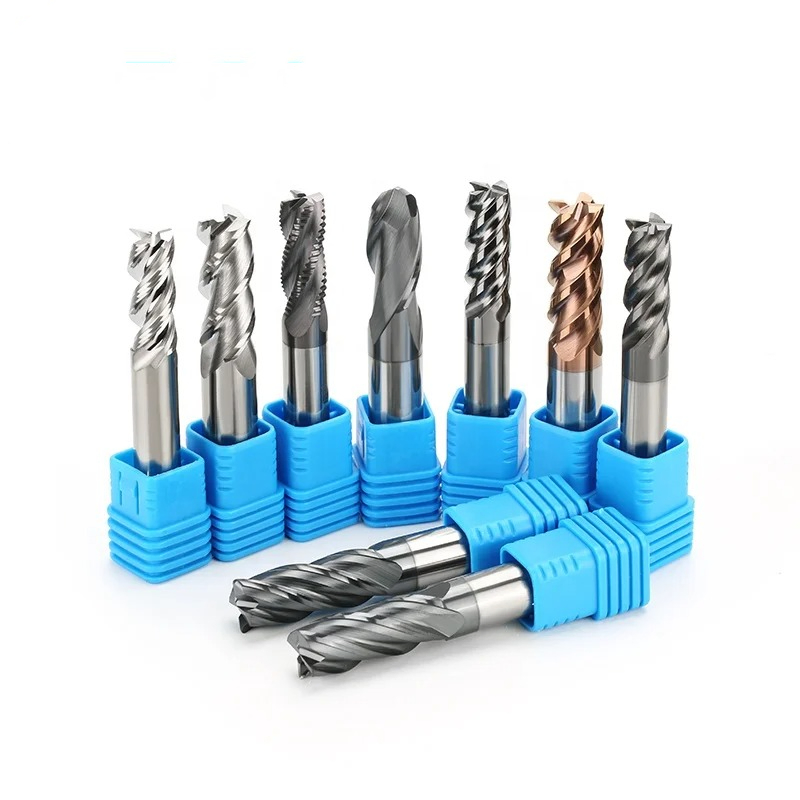
Square End Mill
- Flat bottom and sharp corners
- Used for slotting, pockets, and general milling
Ball Nose End Mill
- Rounded tip
- Used for 3D surfaces, molds, and curved shapes
Corner Radius End Mill
- Flat bottom with rounded corners
- Stronger edges and longer tool life
Chamfer End Mill
- Angled cutting edges
- Used for chamfering and deburring
Why This Matters
Using the wrong shape can:
- Damage part geometry
- Reduce tool life
- Create poor surface finish
Beginner Tip
If you are unsure, square end mills are the most versatile and commonly used starting point.
Question 4: How Many Flutes Should the End Mill Have?
Flutes are the grooves that run along the cutting length of the tool. They affect both cutting strength and chip removal.
Typical Flute Counts
2 Flutes
- Large chip space
- Best for aluminum and soft materials
3 Flutes
- Balanced strength and chip evacuation
- Popular for aluminum machining
4 Flutes
- Stronger cutting edges
- Suitable for steel and harder materials
Variable Flutes
- Uneven spacing
- Reduces vibration and chatter
Why This Matters
Too many flutes can cause chip packing.
Too few flutes can reduce tool strength.
Beginner Tip
Match flute count to material softness. Softer materials need fewer flutes.
Question 5: What Diameter Do I Need?
End mill diameter determines:
- Slot width
- Corner radius capability
- Tool rigidity
Key Considerations
- Smaller diameters allow fine detail
- Larger diameters are stronger and more stable
- Smaller tools are more prone to breakage
Why This Matters
Using a tool that is too small increases deflection and vibration. Using a tool that is too large may not fit the geometry.
Beginner Tip
Choose the largest diameter that fits your design for better stability.
Question 6: How Long Does the End Mill Need to Be?
End mills come in different lengths:
- Standard length
- Long reach
- Extra-long or necked tools
Why Length Matters
Longer tools:
- Have more deflection
- Are more sensitive to vibration
- Reduce machining stability
Shorter tools:
- Are more rigid
- Allow higher cutting parameters
Beginner Tip
Always choose the shortest possible tool that can reach the cutting area.
Question 7: Do I Need a Coating?
Coatings improve tool performance by reducing heat, wear, and friction.
Common Coatings
- Uncoated – aluminum, plastics
- TiN – general purpose
- TiAlN / AlTiN – steel and high-temperature cutting
- AlCrN – heavy-duty machining
- DLC – aluminum and non-ferrous metals
Why This Matters
Using the wrong coating can cause:
- Built-up edge
- Excessive heat
- Premature tool wear
Beginner Tip
If unsure, follow the coating recommendations provided by the supplier for your material.
Question 8: What Cutting Tolerances Are Required?
Tolerance refers to how accurately the tool is ground to size.
Typical Tolerances
- Standard tolerance for general machining
- Tight tolerance (h6, h5) for precision work
Why This Matters
Precision parts require consistent diameter accuracy to avoid:
- Size variation
- Rework
- Assembly issues
Beginner Tip
If tolerance is critical, choose tools with specified diameter tolerances rather than generic listings.
Question 9: What Machine and Setup Am I Using?
Your CNC machine affects tool choice.
Important Factors
- Spindle speed capability
- Machine rigidity
- Tool holder type
- Coolant availability
Why This Matters
High-speed tools require machines that can support them. Poor rigidity increases vibration and tool wear.
Beginner Tip
If your machine is not very rigid, prioritize tools with:
- Fewer flutes
- Stronger geometry
- Shorter length
Question 10: Is This for One-Time Use or Production?
Tool selection differs for prototypes versus mass production.
Prototype Machining
- Flexibility matters
- Versatile tools are preferred
Production Machining
- Tool life and consistency are critical
- Application-specific tools reduce cost per part
Beginner Tip
For production, stable repeatable performance is more important than maximum cutting speed.
Question 11: Do I Need Stock or Custom End Mills?
Many suppliers offer both standard and customized tools.
Stock End Mills
- Fast delivery
- Lower cost
- Ideal for common applications
Custom End Mills
- Optimized geometry
- Better performance in special applications
- Higher efficiency in production
Beginner Tip
Start with stock tools, then move to custom tools once the process is proven.
Question 12: What Support Does the Supplier Provide?
Tool performance is not just about the tool.
Important Support Services
- Technical consultation
- Speed and feed guidance
- Application troubleshooting
- Consistent supply
Why This Matters
Good support reduces trial-and-error and saves time.
Beginner Tip
Choose a supplier that provides clear technical information and responsive support, especially if you are new.
Common Beginner Mistakes to Avoid
- Selecting tools based on price only
- Using long tools unnecessarily
- Ignoring coating recommendations
- Choosing too many flutes for soft materials
- Skipping supplier guidance
Avoiding these mistakes can significantly improve machining results.
Final Summary: A Simple Selection Checklist
Before selecting an end mill, always ask:
- What material am I cutting?
- What operation am I performing?
- Which end mill shape do I need?
- How many flutes are appropriate?
- What diameter and length are required?
- Do I need a coating?
- What level of tolerance and support is required?
By answering these questions, even beginners can select end mills with confidence and clarity.